




Schönborn Park: history of creation and interesting facts

In the heart of Transcarpathia, among the picturesque Carpathian forests, lies one of the most romantic landscape parks in Ukraine - the park of the Counts of Schönborn. This unique monument of 19th-century landscape art tells the story of an aristocratic family, their love for nature and their desire to create a true paradise on earth.

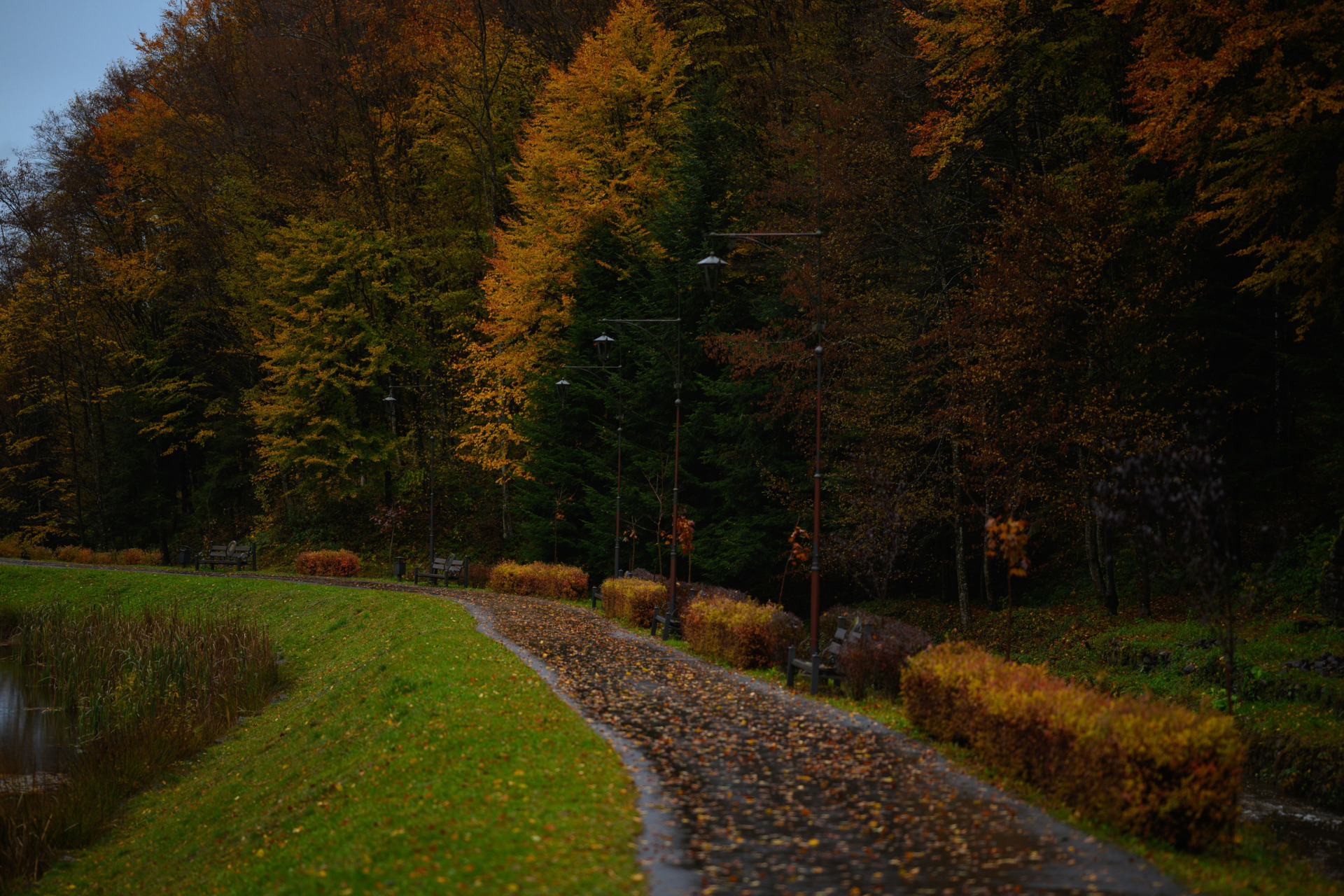
Today, resort guests Voevodyno have a unique opportunity to walk through the territory, which is an exact copy of the legendary park, feel the atmosphere of past centuries and touch the history that lives in every alley, in every tree.
Counts of Schönborn: who are they and how did they get to Transcarpathia?
The Schönborns are an ancient German count family. The name of the family translates as “beautiful spring” or “beautiful spring”, which symbolically reflects the family’s desire for beauty and harmony.
The Schönborn family gave the Austro-Hungarian Empire:
- high-ranking diplomats and politicians;
- church figures – cardinals and bishops;
- patrons and patrons of the arts;
- talented managers and landowners.
How the Schönborns became masters of the Transcarpathian lands
In 1728, Emperor Charles VI granted Count Lothar Franz von Schönborn, Vice-Chancellor of the Holy Roman Empire, estates in Transcarpathia for his loyal service to the crown. Thus began the over 200-year history of the Schönborn family's presence in the Carpathian region.
The Transcarpathian possessions of the Schönborns included:
- settlement of Chinadiyevo;
- the outskirts of modern Mukachevo;
- large forest areas of the Carpathian foothills with a total area of over 40 thousand hectares.
Count Friedrich Karl von Schönborn – creator of the park
The flourishing of the estate and the creation of the park are associated with the name of Count Friedrich Karl von Schönborn (1841-1907), who inherited the Transcarpathian lands in the second half of the 19th century.
He was a highly educated man with a European education, an ardent lover of nature and hunting, with a delicate aesthetic taste.
Schönborn Park began to be laid out in 1890 according to the design of the Czech gardener and landscape architect Karl Kabert. Count Friedrich dreamed of creating the perfect combination of wild nature and man-made beauty - a place where you can enjoy peace, admire the scenery and hunt.
The park was designed in the style of the English landscape park, which was at the height of fashion in aristocratic circles in Europe at the end of the 19th century. Unlike the regular French parks with their geometric shapes, the English style strove for maximum naturalness.
Basic principles of park creation:
- preservation of the natural terrain;
- use of local tree and plant species;
- creation of picturesque landscapes and viewpoints;
- harmonious combination of open meadows and forests;
- a system of alleys for horseback riding and walking;
- cascades of ponds and reservoirs.
The Schönborn estate was a place where the luxury of aristocratic life and proximity to nature were combined. In the summer, the count's family spent several months here. Since Count Schönborn was not only an aristocrat, but also an educated person interested in natural sciences, meteorological observations were conducted on the estate, experiments were carried out on the acclimatization of new plant species, and the fauna of the Carpathians was studied.
The fate of the park after the Schönborns
In the 20th century, in 1918, the collapse of Austria-Hungary occurred. Transcarpathia became part of Czechoslovakia. The Schönborns lost part of their possessions, but retained their estate. In 1944, Transcarpathia joined the USSR and the Schönborn family finally left Ukraine. The park and castle became state property.
During the Soviet period, the castle housed a sanatorium, and the park was turned into a hunting farm. Some of the rare trees were cut down, the ponds silted up, and the alleys became overgrown.
In 1983, the park received the status of a reserve of national importance.
During the time of independent Ukraine, the park was transferred to the Carpathian Biosphere Reserve.
After restoration work, clearing of ponds and alleys, the park was opened to tourists.
Creating a park in Voyevodyno: from idea to implementation
Schönborn Park in Voivodeship is a carefully recreated replica (copy) of the park that surrounded the Beregvar Castle in Chynadievo. Although the park in Voyevodyno was built “from scratch” in 2013, it is completely based on the historical principles and aesthetics of the original 19th century park.
The Voyevodyno resort is located in the same region of Transcarpathia as the original Schönborn estate - in a tract among the Carpathian mountains and forests. Since the original park in Chynadievo partially lost its original appearance during the Soviet era (now the Karpaty sanatorium), the owners of the resort, together with historians and artists, set themselves an ambitious goal - to recreate the spirit and beauty of the legendary park, to create a modern version of this monument of landscape art.
The new modern park, which took three years to build, is dedicated to the 285th anniversary of the transfer of the Transcarpathian lands by the emperor of the Austro-Hungarian Empire as a gift to the Schönborn family. Sculptors, artists, and restorers participated in the creation of the park.
The idea of reproduction was based on:
- respect for the historical heritage of the region;
- the desire to preserve the memory of cultural traditions;
- the desire to create a unique landscape for guests;
- the resort's ecological philosophy.
The park in Vojvodina is not an exact 1:1 copy (after all, the original occupied almost 2,000 hectares), but a conceptual reproduction of key elements. What exactly was copied and transferred:
- symbolism of time – as in the original, calendar logic is recreated here. 7 lanterns symbolize the days of the week, 12 bridges – the months of the year, 24 benches – the hours;.
- Lake Tur is the central element of the park with an island that repeats the contours of the Austro-Hungarian Empire in 1867, as was the idea of Count Schönborn;
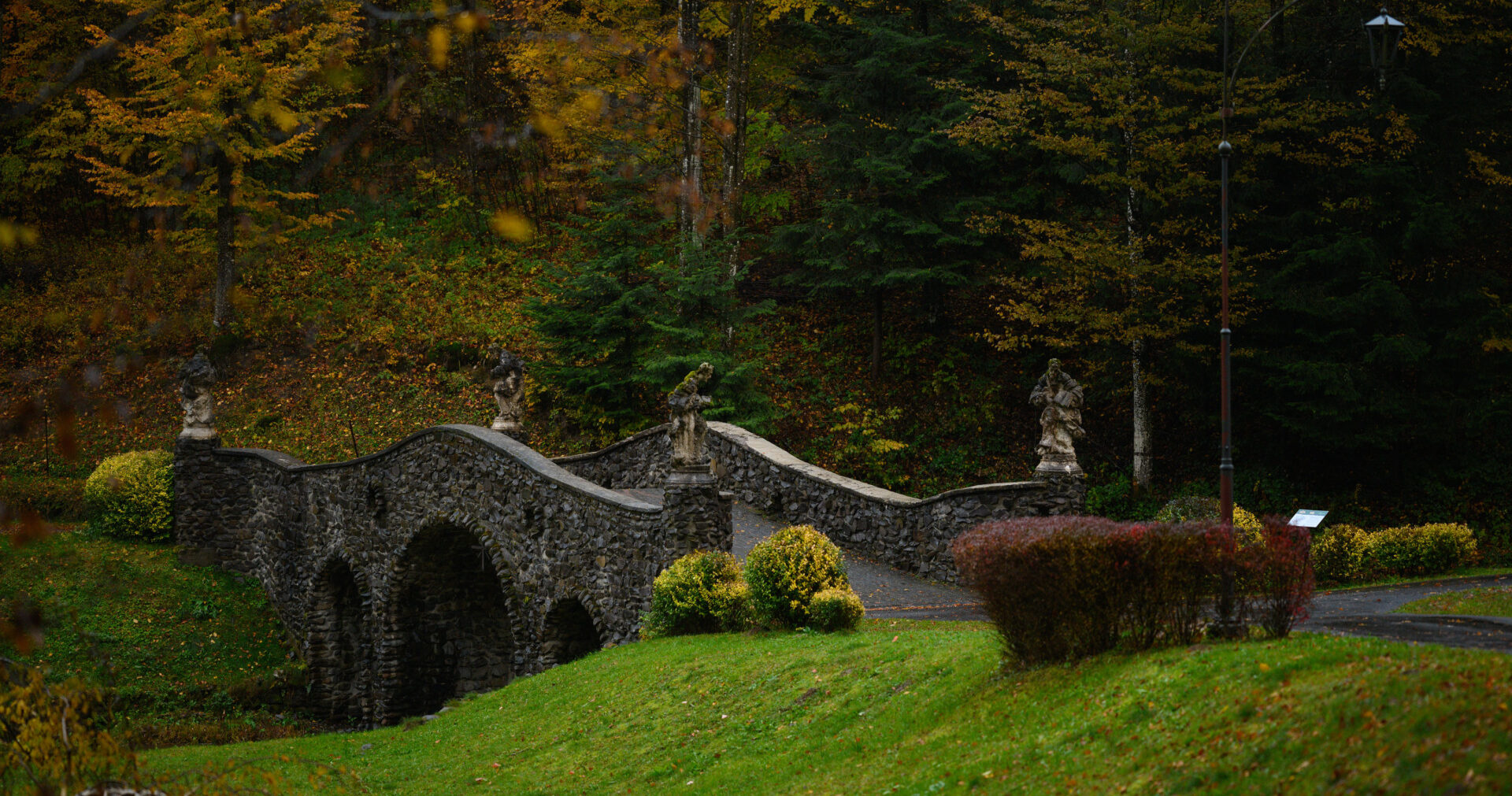
- the spirit of the era – objects were added that emphasize the Austrian atmosphere – the Bridge of the Four Evangelists, which is similar to Charles Bridge in Prague, and an ancient water mill.
Schönborn Park in Vojvodina is not just a beautiful area for walking. It is a living history that combines the past and the present, the aristocratic sophistication of the 19th century and a modern approach to nature conservation.
Every alley, every tree, every lake tells its own story – about the count family that loved this land, about the craftsmen who created this beauty, about the nature that has been preserved through the centuries.
Strolling through Schönborn Park, you walk along the same alleys as Count Schönborn did over 130 years ago. You breathe the same clean air, admire the same landscapes, albeit changed by time, and feel the same harmony between man and nature.
Visit the park in Voevodyno and it will imperceptibly enchant you, making you a part of the history that has been going on here for centuries.