




Schönborn Park
A unique attraction blending historical charm with modern creativity, Schönborn Park offers a glimpse into the rich history of Austria-Hungary and the beauty of Transcarpathian landscapes.
Pearl
Voevodyno resort
Reconstructed in 2013
to mark the 285th anniversary of the transfer of Transcarpathian lands to the Schönborn family by the Austro-Hungarian Emperor, the park promises unforgettable experiences.
Enjoy watching films under the stars, practicing yoga, or simply strolling through the terrenkurs. Visit the park to explore the classic Austrian design of the 19th century, wander along wide avenues surrounding a lake shaped to mirror the borders of Austria-Hungary, marvel at the traveling stones, walk the Via Dolorosa, enter the Celtic garden, and see the functioning water mill.

The territory of the park
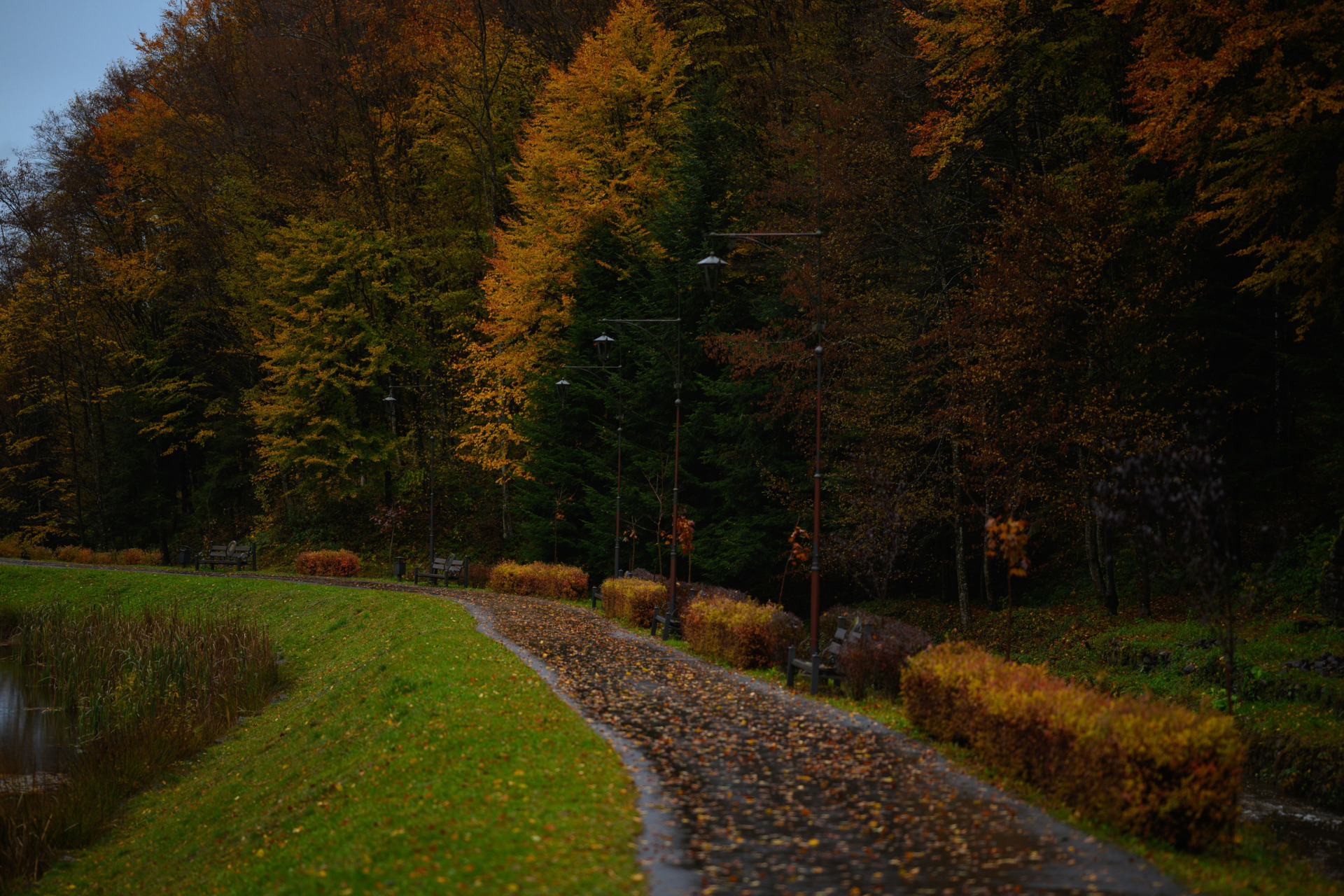
Schönborn Park is a true gem of Transcarpathia, featuring forests, lush lawns, exotic trees, and a large natural lake. The serene beauty of the park invites you to relax and immerse yourself in its peaceful surroundings for hours. Originally designed around a dammed lake, nestled between the mountains of the Turyan Valley, the park was envisioned as a place with a magical atmosphere, complete with scenic paths, shrubs, benches, and a variety of plants, trees, and water features.


A unique opportunity to admire the beauty of the Carpathians
The park is not only perfect for leisurely strolls but also offers the unique experience of riding in a restored old coach from the Austro-Hungarian era, hailing from the Pest region. As you venture deeper into the park, youʼll encounter seven distinct lanterns on the left side, symbolizing the seven days of the week, and twelve bridges on the right, representing the twelve signs of the Zodiac.
Visitors can capture memorable photos at these iconic spots. Just beside it, there’s a Celtic spring covered in moss, which the restorers have preserved untouched.
Visitors can capture memorable photos at these iconic spots. Just beside it, there’s a Celtic spring covered in moss, which the restorers have preserved untouched.

Bridge of the Four Evangelists
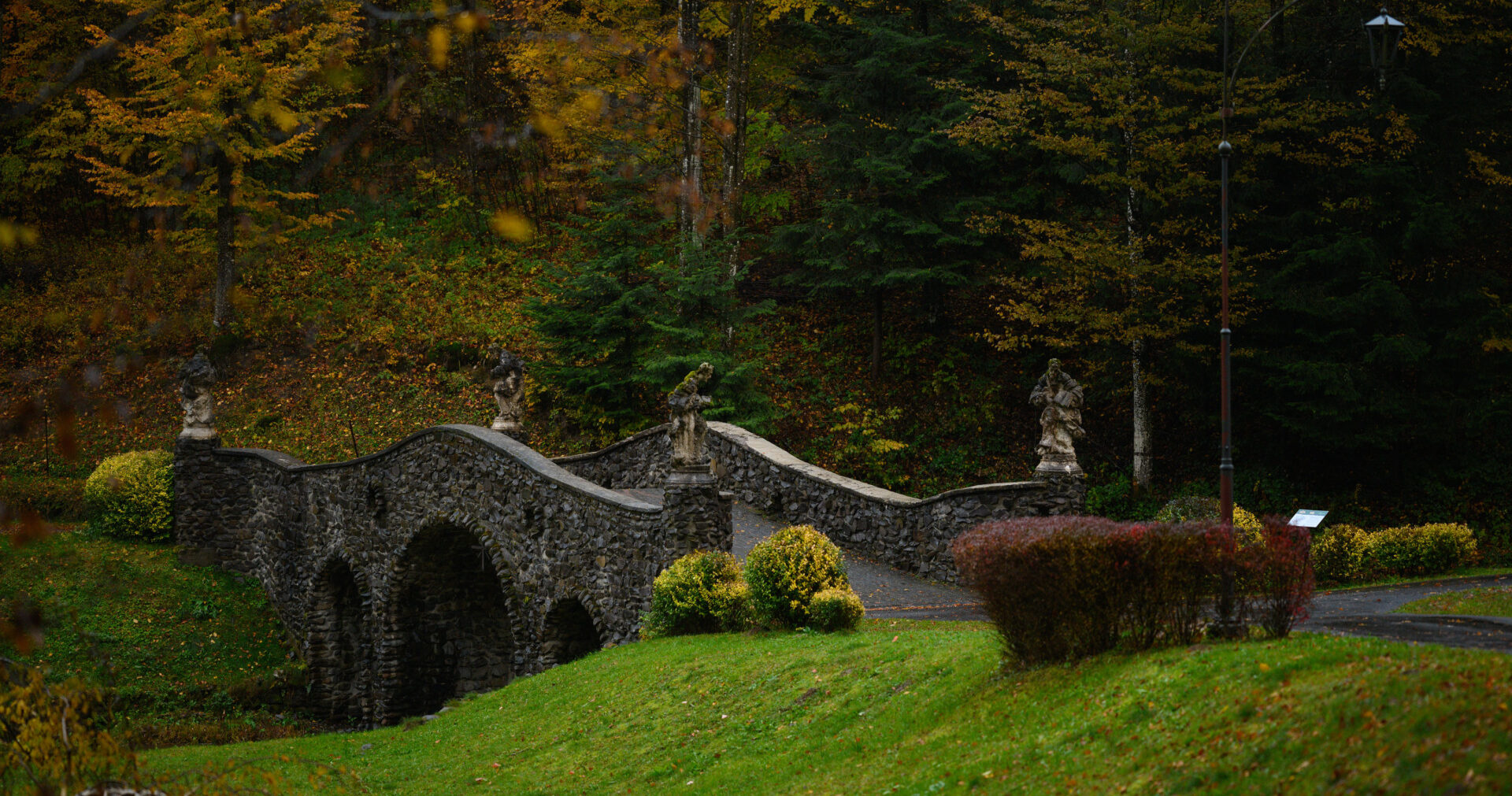
Continuing through Schönborn Park, visitors will encounter the Bridge of the Four Evangelists, an exquisite Baroque-style structure adorned with restored sculptures of the four evangelists: Luke, John, Mark, and Matthew. The sculptural technique bears a resemblance to the artwork on Prague’s Charles Bridge. The bridge features a central arch, from which hang forged crosses symbolizing the Old and New Testaments, seemingly sanctifying the water flowing beneath to the village.
This bridge connects different areas of the park, blending the secular and spiritual realms with the Franciscan Via Dolorosa — a path representing the 14 stations of Christ’s journey to Calvary. The path leads to the Church of St. Catherine, patron saint of scholars, educators, and scientists, who devoted three years to the creation of Schönborn Park.
Schönborn Park gate
Visitors to Schönborn Park are welcomed by an entrance gate that serves as a portal between two eras in Transcarpathia: the Austro-Hungarian Empire and modern Ukraine.
The gate’s two towers display the coats of arms and flags of Austria and Hungary, reflecting the era of the Austro-Hungarian Empire. Flanking the entrance are two guards modeled after soldiers from the Innsbruck Infantry Regiment (Austria) and the Debrecen Hussar Regiment (Hungary).
Count Schönborn, an avid enthusiast of astronomy and calendars — a passion shared by many European dignitaries of his time — incorporated these elements into the park’s architecture. The towers of the entrance gate feature four prominent spires representing the four seasons and twelve smaller spires symbolizing the twelve months of the year.
The gate’s two towers display the coats of arms and flags of Austria and Hungary, reflecting the era of the Austro-Hungarian Empire. Flanking the entrance are two guards modeled after soldiers from the Innsbruck Infantry Regiment (Austria) and the Debrecen Hussar Regiment (Hungary).
Count Schönborn, an avid enthusiast of astronomy and calendars — a passion shared by many European dignitaries of his time — incorporated these elements into the park’s architecture. The towers of the entrance gate feature four prominent spires representing the four seasons and twelve smaller spires symbolizing the twelve months of the year.
On the inner side of the gate, the towers display the coats of arms of the Schönborn dynasty and the most recent owners.
Additionally, from the outside, the entrance appears to be built upon the ancient foundations of an 18th-century park structure. Between the towers, an allegorical protective feature with twelve loopholes, covered with wood shingles, evokes a sense of the past while serving as a peaceful home for local forest birds. Below, you’ll find the inscription “SM” representing “Schönborn Millennium.”
To the right of the entrance, you’ll see a building with an arcade design, featuring maps of the Austro-Hungarian Empire and the layout of the modern park and service areas, also covered with shingles.
After exploring the entrance gate, be sure to visit the park’s grounds to fully experience its beauty.
Additionally, from the outside, the entrance appears to be built upon the ancient foundations of an 18th-century park structure. Between the towers, an allegorical protective feature with twelve loopholes, covered with wood shingles, evokes a sense of the past while serving as a peaceful home for local forest birds. Below, you’ll find the inscription “SM” representing “Schönborn Millennium.”
To the right of the entrance, you’ll see a building with an arcade design, featuring maps of the Austro-Hungarian Empire and the layout of the modern park and service areas, also covered with shingles.
After exploring the entrance gate, be sure to visit the park’s grounds to fully experience its beauty.

Fabulous
Lake Tur
As you continue through the park, you’ll come across a serene reservoir known as Lake Tur. The name “Tur” is believed by some researchers to originate from the Etruscan word “tur,” meaning “water.” The nearby Turya River also contributes to the name of the Turyan Valley. According to another legend, the name “Tur” is derived from the Ukrainian word for “aurochs,” a type of wild ox that once inhabited the valley.
In the center of the lake, you’ll find an island shaped to resemble the borders of the Austro-Hungarian Empire as they were in 1867. On this island stands a pine tree from Dalmatia, planted by volunteers from the sister city of Trogir.

The island features 365 block
representing the 365 days of the year. Additionally, one stone is kept on the pier and is brought to the island once every 4 years during a leap year.
Walks around the lake
The path around the lake is lined with 24 lanterns, representing the 24 hours of the day. Along the shore, there are 22 benches featuring the coats of arms of the states that have governed what is now Transcarpathian region throughout history. These benches offer a peaceful spot to enjoy the changing colors of the Carpathian forests across the seasons and soak in the tranquility.
On the right side of the lake, as you move toward the center of the park, you’ll find two notable springs: one named after Sisi, Empress of Austria Elizabeth of Bavaria, and another dedicated to St. Nicholas. For centuries, residents of nearby villages have used the St. Nicholas spring for its medicinal properties.
St. John's stone mill
On the left side, above the lake, stands a historic stone building — a working water mill. Constructed from stone and metal, and covered with wooden shingles, the mill features two ancient millstones, each weighing about half a ton, and an Austrian heuriger tavern. A large two-meter wooden wheel, made from yellow acacia wood, turns on the outside of the mill.
The windows are adorned with wrought iron, and above the central window display, there’s a bust of St. John of Nepomuk, the patron saint of millers. Inside, visitors can taste traditional schutemeni (a traditional local pie) and ordinary wines made from Austrian grape varieties.
The windows are adorned with wrought iron, and above the central window display, there’s a bust of St. John of Nepomuk, the patron saint of millers. Inside, visitors can taste traditional schutemeni (a traditional local pie) and ordinary wines made from Austrian grape varieties.
Beyond the mill, the path, passing by the Meadow of Ukrainian anti-serfdom rebels, the Opryshky, leads to an ancient 19th-century gold mine, where the gold-diggers’ festival is held every May. Further along the lake’s surroundings, on the right side of the forest, behind a fast mountain stream, you can spot a spring named after Emperor Franz Joseph of Habsburg. If you look deeper into the forest, you’ll find a sculpture of St. Hubertus, the patron saint of hunters. This mountain and its surroundings host the hunters’ festival every September.

Important information!
Visitors not staying at the resort can enter the park for an additional fee.
Paid entrance hours: from 10:00 to 19:00 *Early Bird Special: until 10:00 admission to the territory is free
Tariffs: adults and children from 12 years old - 200 UAH;
children under 12 years old, adults over 65 years old and preferential categories - free of charge
– "Candelabra" near the reception with a candle of remembrance – Schönborn Park is a space of silence and gratitude.
Paid entrance hours: from 10:00 to 19:00 *Early Bird Special: until 10:00 admission to the territory is free
Tariffs: adults and children from 12 years old - 200 UAH;
children under 12 years old, adults over 65 years old and preferential categories - free of charge
- Every day at 9:00 AM, we honor the memory of our fallen heroes with a moment of silence.
– "Candelabra" near the reception with a candle of remembrance – Schönborn Park is a space of silence and gratitude.
